011628 — 1629
Spiegelretourschip
Batavia
Flagship of a fleet bound for Java, she is remembered for her wreck upon Morning Reef and the dark tale that followed thereafter.
56.6 mlength
Willem van de Velde the Younger, The Dutch Fleet Assembling, 1670
A worldwide web beneath the sail
For near two centuries, the Dutch East India Company sent ships forth from the Netherlands across the Atlantic and Indian oceans. Their courses formed one of the world’s earliest multinational trading networks.
Spices, porcelain, textiles, silver, and people did these ships carry. Yet their histories also bear witness to the violence, forced labor, and colonial systems upon which the company’s wealth depended.
Four ships. Four casements upon a world both connected—and contested.
Spiegelretourschip
Flagship of a fleet bound for Java, she is remembered for her wreck upon Morning Reef and the dark tale that followed thereafter.
East Indiaman
Driven ashore upon her maiden voyage, her remarkably preserved hull yet resteth beneath the sands at Hastings.
Jacht
A small and swift vessel, she charted part of Australia’s Cape York Peninsula under Willem Janszoon in 1606.
Vlieboot
Commissioned by the VOC and captained by Henry Hudson in his search for a western passage unto Asia.
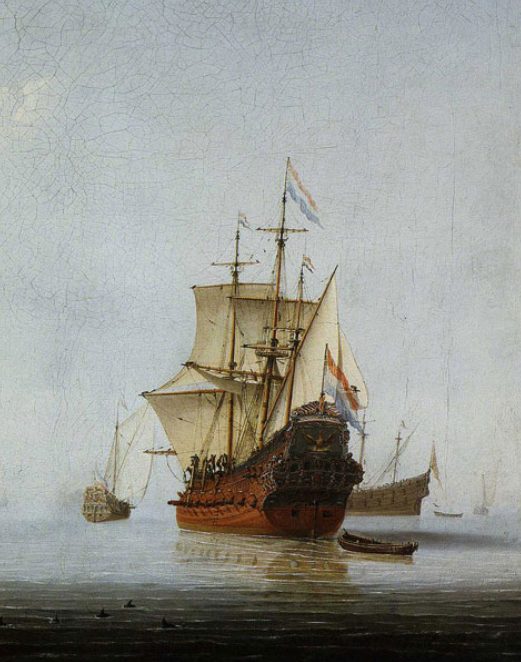
VOC ship Phenix, Willem van de Velde the Younger, 1653
“The archive keepeth more than triumph. It keepeth the lives caught in the company’s wake.”
The VOC advanced navigation, finance, and shipbuilding. Yet it also waged war, seized land, enforced monopolies, and profited from slavery and coercion. To know these vessels aright is to hold both histories together.
Return unto the beginning